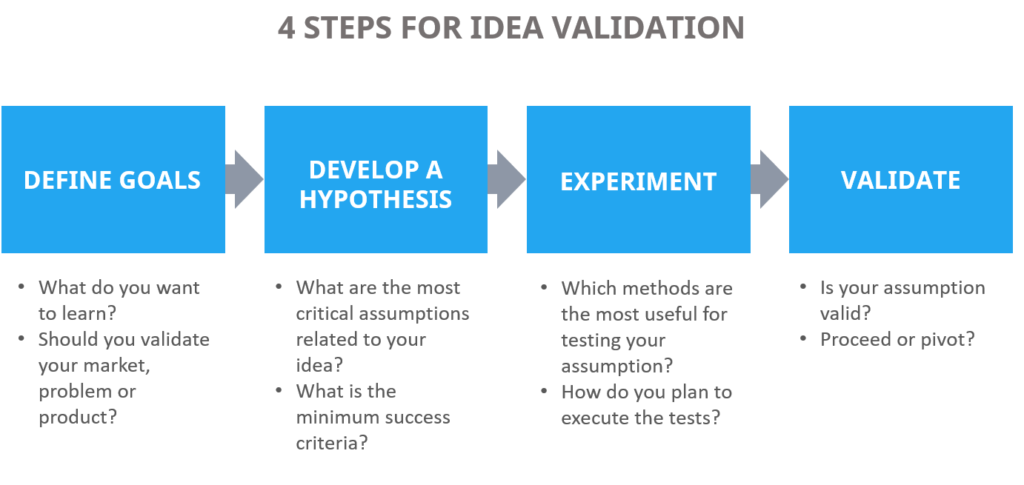
The urge to start building immediately is strong when you’re excited about an idea. But learning how to validate startup idea concepts first can save you months, sometimes years, of wasted effort.
Talk to Potential Customers Before Writing a Line of Code
In short: the fastest way to validate a startup idea is having direct, honest conversations with potential customers about their actual current behavior, not asking whether they’d theoretically like your idea.
Ask About Behavior, Not Opinions
I’ve noticed founders ask “would you use this?” and get enthusiastic yeses that never turn into actual customers. Better questions focus on what people currently do to solve the problem, and how much frustration or money that current solution costs them.
Build the Smallest Possible Test
- A simple landing page describing the idea, measuring genuine sign-up interest
- A manual, “concierge” version of the service, done by hand before automating anything
- A pre-order or waitlist to see if people commit something real, even just an email
Look for Evidence of Existing Spending
If people are already spending money on a worse alternative, that’s a much stronger validation signal than polite enthusiasm about your specific idea. Existing spend proves the problem is real and worth solving.
Don’t Just Ask Friends and Family
Friends and family tend to be encouraging regardless of whether the idea is genuinely strong. Real validation requires talking to strangers who have no reason to be nice about it.
A Real Example Worth Considering
Picture someone in Jaipur who wanted to build an app connecting local home chefs with office workers needing lunch delivery. Before building anything, they manually ran the service for three weeks using WhatsApp and personally coordinating deliveries — validating real demand and pricing before investing in any actual app development.
[link to related guide about running a manual concierge MVP here]
Watch for False Positives
Sometimes enthusiasm feels like validation but isn’t. Genuine interest usually comes with some real commitment attached — money, time, or a willingness to actively participate, not just polite words.
[Suggested image alt text: “founder conducting customer interviews to validate startup idea”]
FAQ
How long should it take to validate a startup idea? It varies, but most focused validation efforts can be done meaningfully within a few weeks to a couple of months.
Do I need a working product to validate a startup idea? No — manual tests, landing pages, and direct customer conversations often work well before any product exists.
What’s the biggest mistake people make trying to validate startup idea concepts? Asking friends and family, or asking hypothetical questions instead of observing real behavior and commitment.
How many people should I talk to for solid validation? Aim for at least 15-20 honest conversations with your actual target customer segment.
Can a startup idea be validated without spending any money? Largely yes, through conversations and manual testing, though small budgets for landing pages or ads can help too.
Conclusion
Learning to validate startup idea concepts properly before building saves enormous time and money down the road. Talk to real potential customers, look for actual spending behavior, and test manually before investing in a full product — validation done honestly early on makes everything that follows far less risky.