Giving constructive feedback well is a genuinely underrated leadership skill. Get it wrong, and even well-intentioned feedback can quietly demotivate someone for weeks.
Focus on Behavior, Not Character
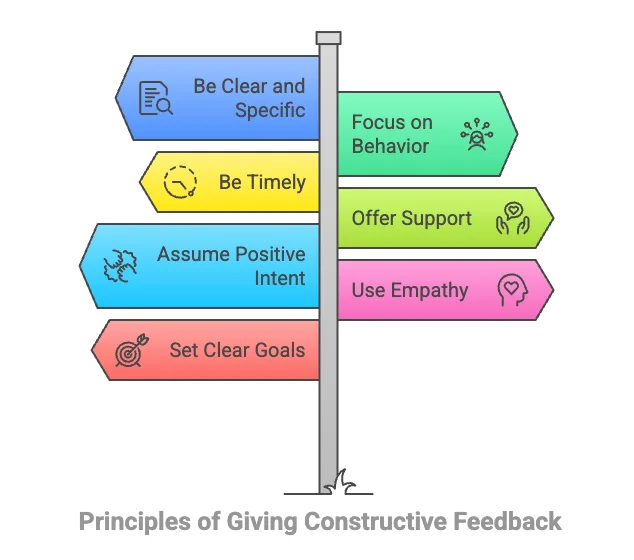
In short: genuinely constructive feedback focuses specifically on observable behavior and its impact, rather than making broader statements about someone’s character or ability, which tend to feel personal and defensive rather than actionable.
Be Specific Instead of Vague
“Your work needs improvement” tells someone almost nothing useful. Specific feedback — what exactly happened, what impact it had, what a better approach might look like — gives people something concrete to actually act on.
Balance Timing With Genuine Care
- Address issues close to when they happen, not weeks later when details are fuzzy
- Choose a private setting for anything potentially sensitive or critical
- Consider the person’s current workload and stress level before adding difficult feedback
Ask Questions Instead of Only Stating Conclusions
I’ve noticed feedback conversations go significantly better when they include genuine questions — “what was your thinking there?” — rather than only delivering a one-directional judgment about what went wrong.
Pair Critical Feedback With Genuine Recognition
This isn’t about softening feedback into meaninglessness, but genuinely acknowledging what someone did well alongside what needs improvement gives a more honest, complete picture than critique alone.
A Real Example Worth Considering
Picture a team lead at a company in Jaipur who used to deliver feedback purely as a list of what went wrong, leaving her team feeling consistently deflated despite her good intentions. Shifting to asking questions first — understanding their reasoning before offering her own perspective — noticeably changed how feedback conversations felt for her team.
[link to related guide about running effective one-on-one feedback conversations here]
Follow Up After Feedback Is Given
Constructive feedback that’s given once and never revisited often fades without real change happening. A brief follow-up check-in shows genuine investment in the person’s improvement, not just a one-time critique.
[Suggested image alt text: “manager giving constructive feedback during a one-on-one conversation”]
FAQ
How do I give constructive feedback without sounding harsh? Focus on specific behavior and impact, ask questions to understand their perspective, and balance critique with genuine recognition.
Should feedback always be given privately? Sensitive or critical feedback should generally be private, while positive recognition can often be shared more publicly.
How soon after an incident should feedback be given? As soon as reasonably possible, while details are still fresh for both parties involved.
Is it okay to give feedback over email or chat? For minor points it can work, but more nuanced or critical feedback usually benefits from a real conversation.
How can I tell if my feedback style is actually demotivating my team? Watch for decreased engagement or defensiveness after feedback conversations, and ask trusted team members directly for honest input.
Conclusion
Genuinely constructive feedback motivates rather than deflates when it’s specific, well-timed, and balanced with real understanding of the other person’s perspective. Practice this consistently, and your team will likely start seeing feedback as genuinely useful, rather than something to dread.